Haunted Sites
Summoning the spirits…
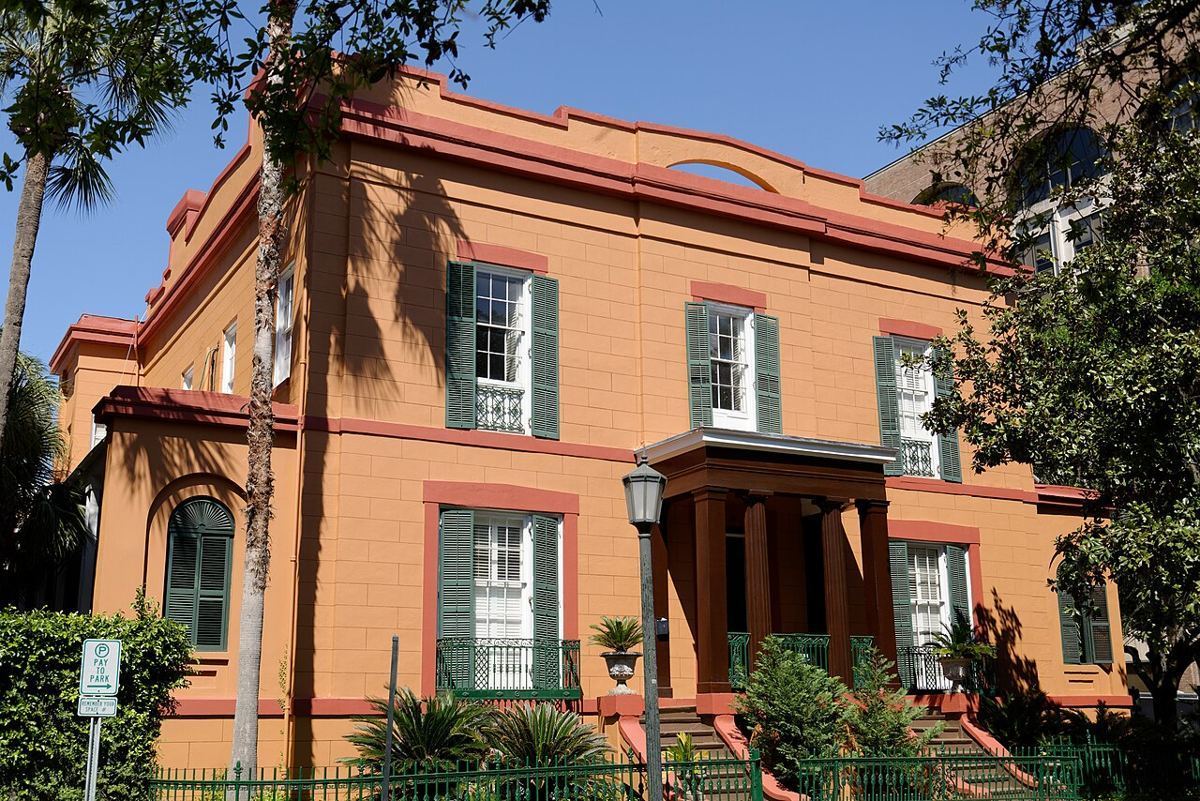
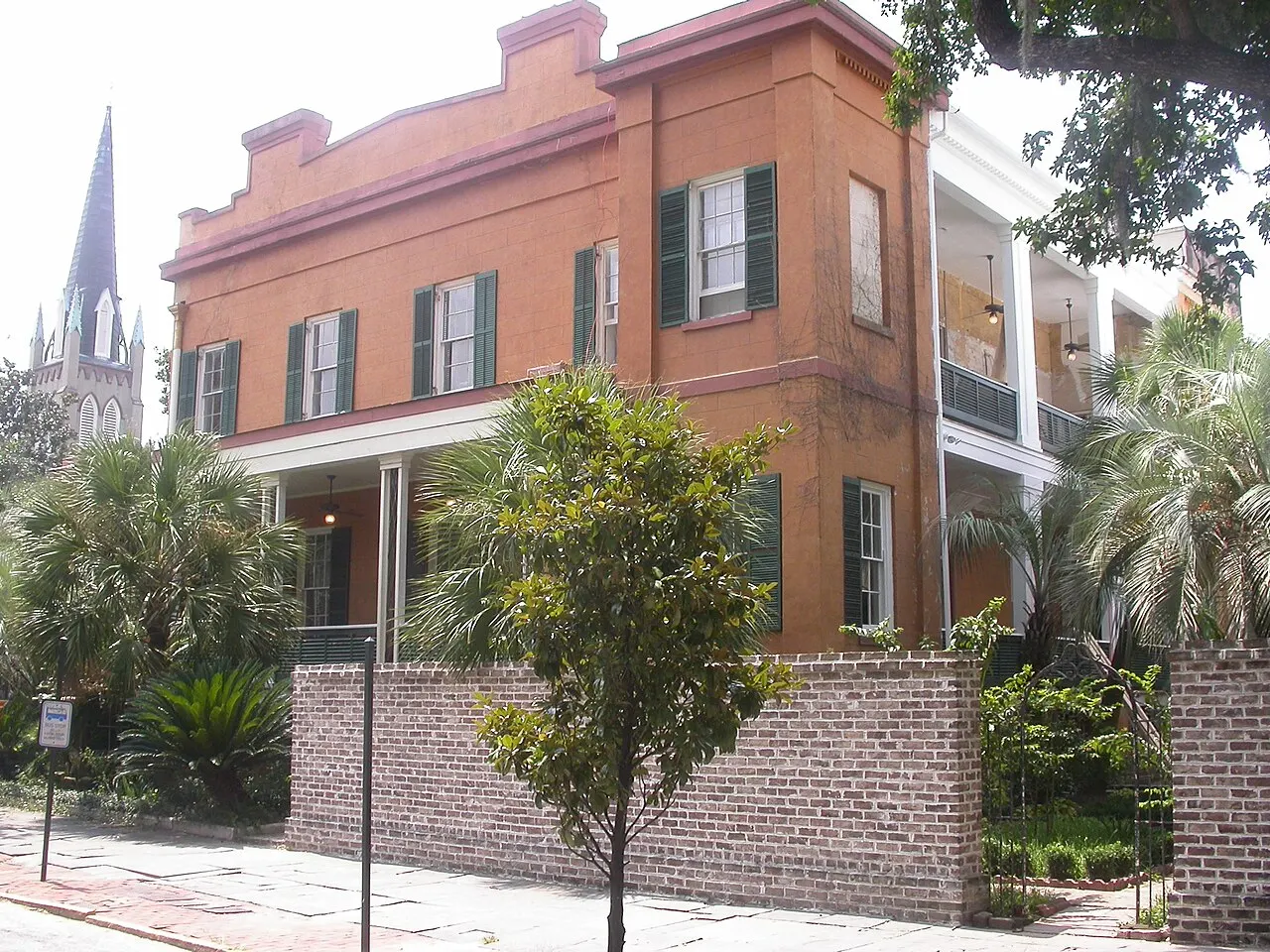
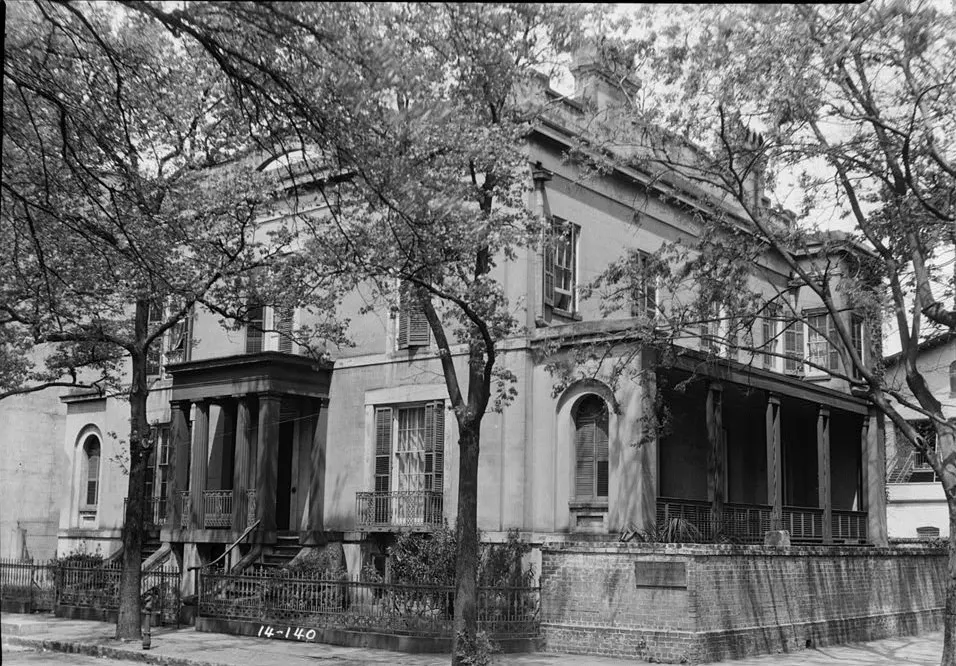
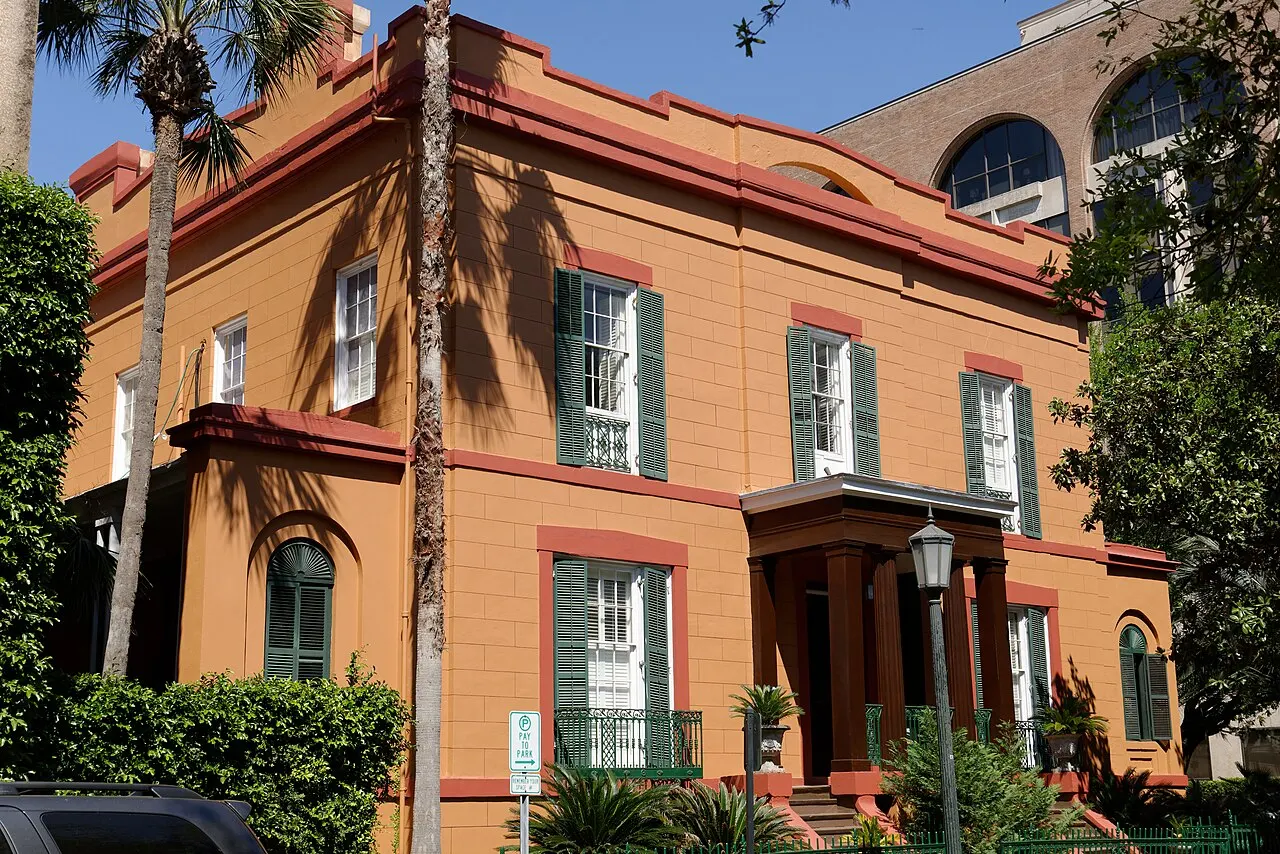
Photo: Jud McCranie · CC BY-SA 4.0 · via Wikimedia Commons
Sorrel-Weed House
Greek Revival and Regency mansion on Madison Square, one of Georgia's first two state landmarks. It offers its own ghost tours.
- Address
- 6 W Harris St, Savannah, GA 31401
- Hours
- Check the official website for current hours.
- Admission
- Check the official website.
- Access
- museum tours (daytime history tour and its own nightly ghost tour inside, reservations required)
- Website
- sorrelweedhouse.com
- Phone
- +1-912-257-2223
The real history
About the place
The Sorrel-Weed House at 6 West Harris Street, on Madison Square, was built around 1838–1840 for Francis Sorrel (1793–1870), a wealthy shipping merchant. It was designed by Charles Cluskey, an architect who came to Savannah from New York in 1829 and later designed the old Governor's Mansion in Milledgeville. The 10,000-square-foot house mixes Greek Revival with English Regency influences. The National Trust Guide to Historic Places compares it to Monticello and to William Jay's Owens-Thomas House. In 1954 it was one of the first two homes in Georgia named a State Landmark.
Sorrel was an enslaver. Records cited by Wikipedia show he held between three and eleven enslaved people a year throughout his life, and that he sold two women, Minda and Louisa, and a ten-month-old child, Virginia, to other enslavers in Savannah. He was also listed as guardian to several free women of color. His son Gilbert Moxley Sorrel became one of the youngest Confederate generals and later wrote Recollections of a Confederate Staff Officer. Robert E. Lee, a friend of Francis Sorrel since the 1830s, visited in 1861–62 and again in 1870.
Henry D. Weed agreed to buy the house in 1859 and took possession in 1862, and his family kept it until 1914. In 1940 it hosted the first exhibit of the Society for the Preservation of Savannah Landmarks, the group that later became the Historic Savannah Foundation. The Cohen family owned it for more than fifty years and ran the Lady Jane clothing store from a brick addition, which was removed after 1996. The opening feather shot of Forrest Gump (1994) was filmed from its roof.
Today it is a privately owned house museum. It offers daytime history and architecture tours and ghost tours every evening, all by reservation.
Local legend
The Ghost Story
Told here as local lore, the way guides, books and visitors tell it. These are legends, not established fact.
Few houses in Savannah are more closely tied to ghost tours than the Sorrel-Weed House, and its central legend is one the house itself has been revising. As the story was long told, Francis Sorrel's wife, Matilda, discovered that her husband was involved with Molly, a young enslaved woman in the household. In her grief, the legend says, Matilda threw herself from an upper balcony and died in the courtyard below. About a week later, Molly was said to have been found hanged in her room in the carriage house. Some versions call it suicide, others murder, with the blame laid on Francis, another enslaved person, or a grieving Sorrel child.
Guides tell of a woman's presence in the main house and of Molly in the carriage house. Visitors have described sudden cold spots, a feeling of being watched, and voices on recordings. Paranormal TV built the house's fame. TAPS investigated it for a 2005 Halloween special of Ghost Hunters, the Ghost Adventures crew came in 2014, and it has since appeared on the Travel Channel's The Most Terrifying Places in America and on BuzzFeed Unsolved. The Wall Street Journal wrote about its haunted reputation in 2009, and travel lists regularly rank it among the most haunted houses in America.
For years, part of the legend was that Molly's remains lay under a sunken spot in the carriage house basement floor. In 2017 the house invited Armstrong State University archaeologists to excavate it, and the dig was open to the public. The researchers found a trash pit full of animal bones, metal, glass, ceramics and household objects, and no burial.
Today the house's own staff say there are 'about 50 different versions' of the story, and they have reworked their tours to stay closer to the documented history. That history includes the real cruelty of urban slavery, which the Molly legend reflects even though it can't be documented.
Sources
- Wikipedia: Sorrel–Weed House
- Digging Savannah: Excavations in the Carriage House Basement of the Sorrel-Weed House (Georgia Southern / Armstrong, 2017)
- Triangle Around Town: Inside Savannah's Sorrel-Weed House
- WPR, To the Best of Our Knowledge: Uncovering the Buried History of Savannah's Ghost Tours
- Tiya Miles, Tales from the Haunted South (UNC Press), ch. 'Molly and Matilda'
- Sorrel-Weed House (official site)
History highlights
- Dates to 1840
- Architect: Charles B. Cluskey
Tips
- Hours and admission change: check the official website before you go.
- Featured on 9 ghost tours; see the links below.
Featured on
- Old Savannah Tours – Grave Encounters trolley ↗
- Afterlife Tours (Voices of the Dead / True Crime / Restless Souls) ↗
- Genteel & Bard – Dark History & Ghost Encounter Tour ↗
- Shannon Scott Tours – Haunted Savannah Ghost Tour by Dr. Buzzard ↗
- Destination Ghost Tours – Original Haunted Savannah Tour ↗
- Shaka Guide – Haunted Savannah: Legends & Lore (self-guided) ↗
- #1 Ghost Tour (self-guided online tour) ↗
- Sorrel-Weed House ghost tour ↗
- Visit Savannah – Hauntingly Useful Itinerary (press list) ↗